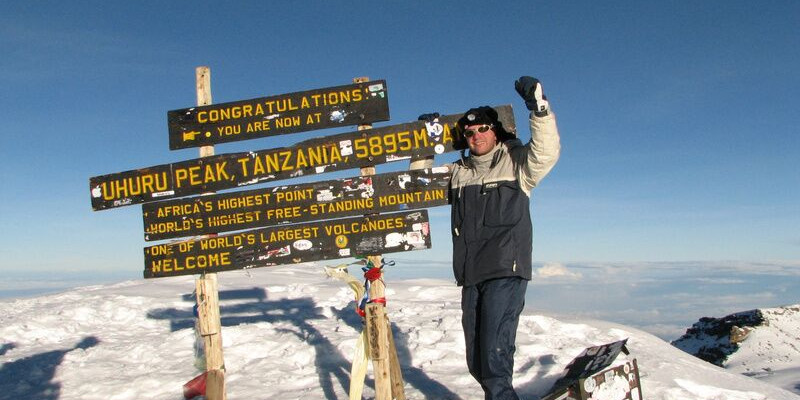


Mount Kilimanjaro climbing view Rongai Route 7 days and 6 nights

About Rongai Route: Starting from the northeastern side of the mountain near the Kenyan border, the Rongai Route rises above the Amboseli plains and approach the summit of Kilimanjaro west of the Mawenzi peak. It is an unfrequented route and is also the easiest camping approach to Uhuru Peak. The descent normally uses the Marangu Route. There are two variations to this route. You can choose to attempt the summit via Mawenzi Tarn Hut or via School Hut which is also referred to as the Outward Bound Hut. The former is longer and more popular. Prior acclimatization is recommended in order to attempt the latter successful.
Detailed itinerary:
Day One: Rongai Gate (1,800m/5,900ft) to First Cave Camp (2,600m/8,400ft)
Elevation Gain: 760 meters, 2,000 feet
Hiking time: 4 – 6 hours
After an early breakfast in Arusha, drive for about 5 hours to the Rongai Gate near the Kenya border. After registering at the gate, begin your climb to Uhuru Peak, the roof of Africa. First hike through forests where you may see and hear wildlife. Eat lunch on the trail before continuing to the first campsite. Rongai ascends via the less forested northern side of the mountain.
The Rongai Route is one of the least crowded routes on Kilimanjaro because of the long drive to the gate. The Rongai trail is thought to have the best chance of viewing wildlife.
Day Two: First Cave Camp (2,600m/8,400ft) to Kikelewa Camp (3,600m/11,810ft)
Elevation Gain: 1,000 meters, 3,280 feet
Hiking time: 4 – 6 hours
Hike through Kilimanjaro's moorland. The Rongai route is relatively short and steep, making for shorter hiking times. During the hike, view Mawenzi Peak ahead.
Day Three: Kikelewa Camp (3,600m/11,810ft) to Mawenzi Tarn Camp (4,330m/14,200ft)
Elevation Gain: 730 meters, 2,390 feet
Hiking time: 4 – 6 hours
This more leisurely acclimatization day starts with a morning hike followed by a rest in the afternoon and evening. The hike is relatively short but steep. The Mawenzi Tarn campsite is situated below Mawenzi Peak and offers stunning views of both Mawenzi and Kibo.
Day Four: Mawenzi Tarn Camp
Day four is an acclimatization day at Mawenzi Tarn. We advise hiking a bit higher this day before returning to Mawenzi Tarn in the afternoon.
Day Five: Mawenzi Tarn Camp (4,330m/14,200ft) to Kibo Camp (4,750m/15,580ft)
Elevation Gain: 420 meters/1380 feet
Hiking time: 4 – 6 hours
Cross the lunar landscape of the saddle on this day to arrive at the final campsite. Kibo Camp is situated directly below the Kibo cone, giving you stunning uninterrupted views of your final destination.
Day Six: Kibo Camp (4,750m/15,580ft) to Uhuru Peak (5,895m/19,340ft) to Horombo Hut (3,720m/12,200ft)
Elevation Gain: 1,145 meters, 3,760 feet
Elevation Loss: 2,175 meters, 7,140 feet
Hiking time: 6 hours to the rim, 1.5 hours to Uhuru, 4 hours to Kibo, 4 hours to Horombo
Around midnight, begin the final ascent to Uhuru Peak, the highest point in Africa. Hike by the light of your flashlight for the next six hours. The ascent to the crater rim is the most challenging part of the entire trek. The trail is very steep until you reach the crater rim at Gilman's Point.
The hike from Gilman's to Uhuru Peak is a gradual climb and, as far as hikes go, not very difficult. The altitude, however, makes the hike long and tiring. The crater rim hike takes about two hours. Upon reaching Uhuru, take photos of your guide and group at the peak before beginning the descent to Horombo Hut.
Day Seven: Horombo Hut (3,720m/12,200ft) to Marangu Gate (1,800m/5,905ft)
Elevation Loss: 1,920 meters, 6,295 feet
Hiking time: 6 – 8 hours
After breakfast, finish the trek with a descent to Marangu Gate. Your last hike on Kilimanjaro is a beautiful one, passing through Kilimanjaro's cloud forest. Watch your step during the descent, as the trail can be slippery. Our vehicles will be waiting at Marangu Gate to take you back to Arusha. You can purchase t-shirts and sodas at the gate.
………End of trekking………………..
Kilimanjaro Climb includes:
All park entrance, camping, and rescue fees ( 3 meals a day, dinner, breakfast, lunch included
All meals and filtered drinking water while on the mountain
Camping equipment including mountaineering, mess and sleeping tents (Mountain Hardwear, North Face, Marmot), table and chairs, toilet tent, sleeping mattresses and pillows, hot water bottles
Guide (Wilderness First Responder certified), cook and porter salaries and fees
Baggage porterage
Transport to/from national park gates
First aid kit and pulse oximeter
Kilimanjaro Climb excludes:
Accommodation in Arusha/Moshi
Tanzania Visa
Gratuity
Personal Expenses (e.g. laundry, telephone, beverages, etc.)
Meals not listed above
Optional Tours (short safari after your climb etc)
Personal travel insurance.
Tips for the guides and porters


